
 Clear30 for Universities
Clear30 completes NIH/NIDA SBIR Phase I
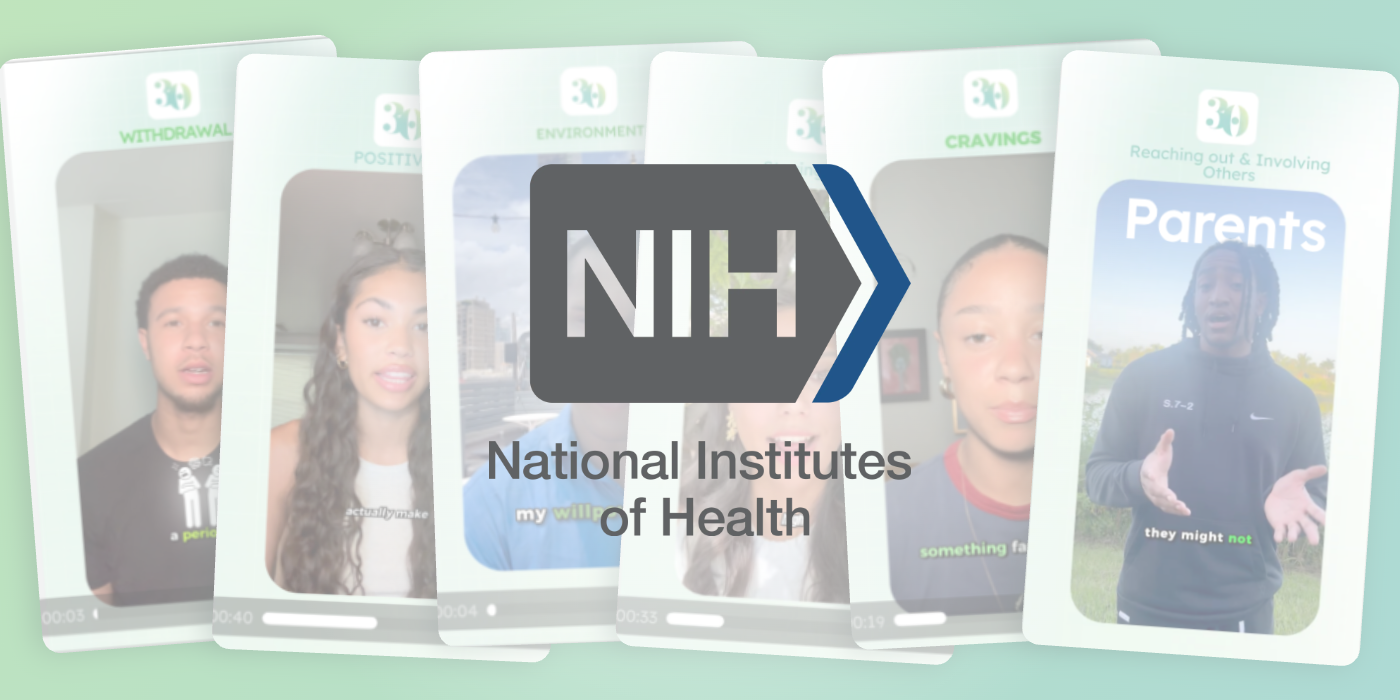
In 2025 Clear30 completed Phase I of a Small Business Innovation Research grant from the National Institute on Drug Abuse, part of the National Institutes of Health. The award funded the design, development and feasibility testing of a version of the company’s 30-day cannabis program built specifically for people under 21, an age group with almost no dedicated mobile cannabis support.
Cannabis use disorder affects 20.1 million Americans, or 7.1 percent of the population, and prevalence is highest among 18- to 25-year-olds at 15.8 percent, according to the 2023 National Survey on Drug Use and Health. Fewer than one in ten people with the disorder receives formal treatment. Over the same period in which use among young adults rose, treatment admissions declined, a pattern that persists after accounting for insurance coverage, criminal justice referrals, treatment center availability and state legalization status.
Retrospective studies place the average age of first use among people who develop cannabis use disorder at around 15, while the disorder itself peaks at 21 to 22. THC potency has risen three- to five-fold, with the sharpest risk falling on the youngest users.
Clear30’s Phase I work started from the premise that a shorter, unlabeled commitment reaches young people that formal treatment does not. The program asks a user to take a 30-day break rather than to accept a diagnosis, an approach researchers have begun describing as intervening at “pre-addiction,” by analogy with prediabetes.
Fred Muench, the grant’s principal investigator, puts the reasoning this way.
 Dr. Fred Muench, Principal Investigator and Co-Founder
The content was written by subject-matter experts and built in collaboration with young people at every stage. Rather than produce material and simply check that it tested well, the team brought young people into the writing itself: what they would actually want to hear, in their own words, at the moment of a craving. Many of the videos are performed by young people, in their own voices and cultural perspectives, rather than delivered by a clinician talking down from the outside.
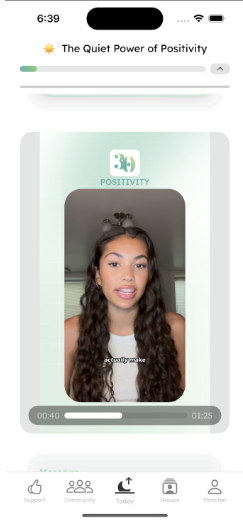
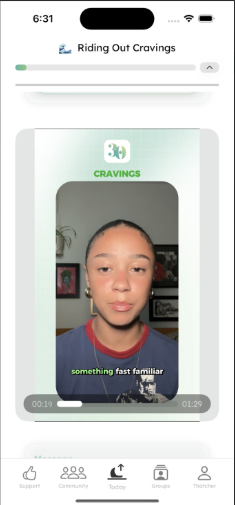
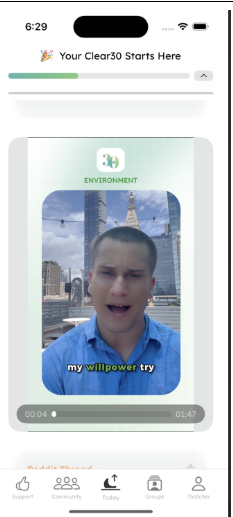
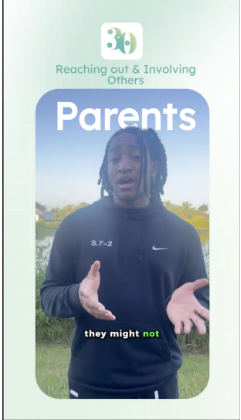
Phase I produced a new assessment covering solitary versus group use, route of administration, product potency and harm perception; more than 250 tailored engagement messages; 90 videos; 30 interactive carousels; 40 guided meditations, ten written specifically for younger users; a personalization engine built as a guidance system rather than a conversational chatbot; and a HIPAA-compliant platform spanning iOS, Android and web. Supporting features include a parent guide, optional progress sharing and a voucher system for controlled access through a therapist or guardian.
The phase closed with an open-label feasibility trial of 30 participants aged 18 to 20, recruited through social media, who ran the full program for one month. Measures included the CUDIT-R for severity, the Marijuana Problem Index for consequences, single-item readiness and craving scales, and the System Usability Scale, alongside daily check-ins on use, craving and commitment. Users rated each message they received, so every message in the program now carries a record of whether recipients found it useful.
Matthew, one of the young people who co-created the content, described what that was like.
 Matthew, youth co-creator
Phase I findings informed a Phase II application to extend the work and develop a prescription digital therapeutic for cannabis use disorder.