
 Clear30 for Universities
Clear30 presents at the University of Michigan d3center working session on social just-in-time adaptive interventions
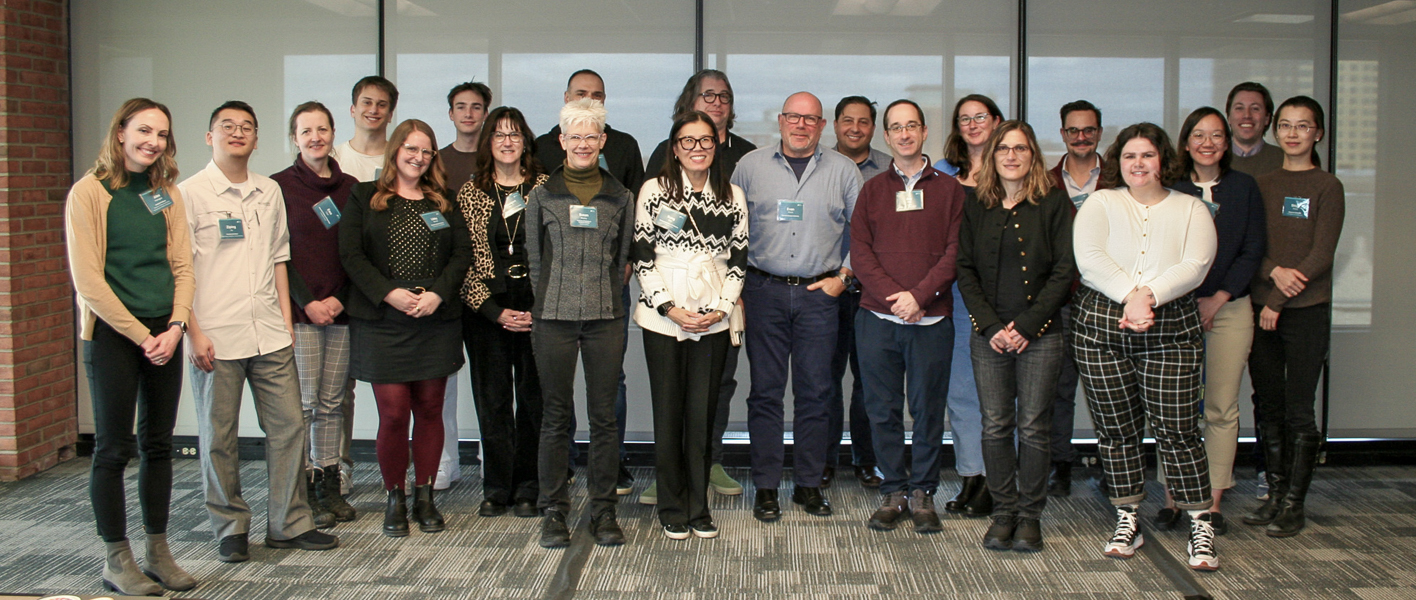
On January 7, 2025, a group of statisticians, behavioral scientists, physicians and designers spent a day in a room at the Institute for Social Research in Ann Arbor working through a problem the field has not solved: how a digital intervention that performs in a trial becomes something a person actually uses.
The session was convened by the d3center at the University of Michigan together with Susan Murphy’s lab at Harvard. Murphy is a member of both the National Academy of Sciences and the National Academy of Medicine and a MacArthur Fellow, and much of the methodology behind adaptive digital interventions traces back to her work. Clear30 was one of two participants from the commercial side, represented by two of its three co-founders, Asher Herbstman and Thatcher Clough. The other was Evan Hirsch, whose design career runs from the first Microsoft Surface and more than twenty five game titles to founding Health2047, the American Medical Association’s innovation lab, and co-founding a studio making evidence-based games for adolescents with anxiety and depression.
A just-in-time adaptive intervention delivers support at the moment a person is most able to act on it, using what the person has just reported about their state and context rather than a fixed schedule.1 The day’s central case was ADAPTS-HCT, which applies that idea to medication adherence in adolescent and young adult cancer patients after a stem cell transplant. What makes it unusual is that it does not treat the patient alone. It intervenes on three levels: the young person taking the medication, the parent supporting them, and the relationship between the two, each on its own timescale. Reinforcement learning algorithms decide what to send and when.
Several people in the room work directly on cannabis. Maureen Walton’s group at Michigan runs micro-randomized trials on mobile intervention for cannabis use, and other attendees work on substance use in teenagers, suicide risk in youth, and adherence in chronic illness. The methods are shared even when the conditions are not.
An intervention can be rigorously tested, published, and then reach almost nobody. Academic work is rewarded for producing evidence, not products, and the two require different skills, different funding and a different definition of finished. The group was explicit about it: the goal is real-world therapeutic impact and adoption, not another set of published results.
Which is why the room included people who build consumer products. Much of the afternoon was spent on questions that rarely appear in a grant application. What does the hundred day journey feel like for a participant, and where does it get boring. How do you onboard someone in a way that earns a second session. What holds attention when the novelty is gone. Design was treated not as decoration on top of the science but as the thing that determines whether the science ever gets used.
That gap is the reason Clear30 exists. More than ninety percent of people with cannabis use disorder never enter treatment, and the ones who want to cut back are not waiting for a clinical referral. Reaching them requires a product people open on their own, which is a different discipline from designing a trial.
The mechanism is also familiar. The check-in at the center of Clear30 is a just-in-time adaptive intervention in practice: what a person reports on a given day changes what they receive next, and the support arrives close to the moment it is needed rather than on a calendar. Clear30 brought the engagement side of that to the table, including what it had learned about retention across tens of thousands of downloads, and took away a clearer view of how the methodology community thinks about personalization.
The group left with a working agenda rather than a conclusion, including how open-source infrastructure for building these interventions might be sustained, and what a genuine research and industry collaboration would need to look like to get a tested intervention into the hands of the public.