
Weed Withdrawal Symptoms
What to Expect and How to Get Through Each Stage
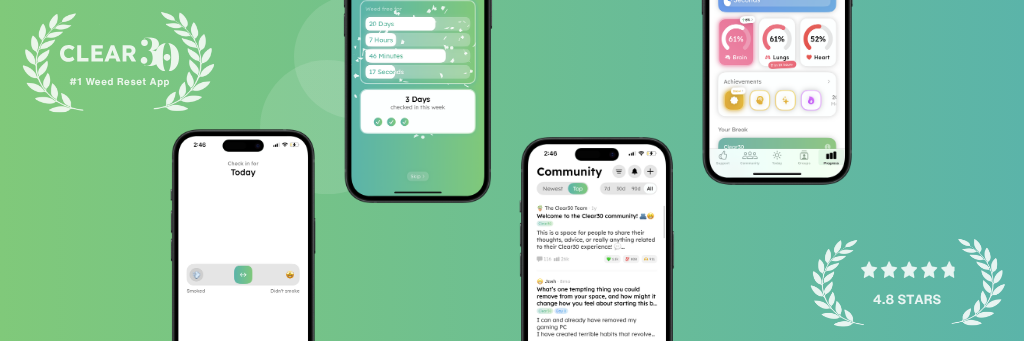
Clear30 is the #1 science-based weed-break app. Join 150,000+ others resetting their relationship with cannabis and taking control of their focus, sleep, and mood.
Taking a break from cannabis can feel empowering — but let's be honest, withdrawal is not a walk in the park. The good news: it's temporary, it's manageable, and it's a clear sign that your body and mind are recalibrating for the better.
This guide covers what to actually expect across the first month — symptom by symptom, day by day — and the practical strategies that make each stage easier to get through.
🧠 What Cannabis Withdrawal Is (and Why It Happens)
How Withdrawal Works in the Brain
Withdrawal happens when your body has adjusted to the regular presence of something — in this case, THC — and has to recalibrate when it stops. Over time, daily cannabis use shifts how your endocannabinoid system and dopamine pathways function. Your brain suppresses some of its own signaling because THC is doing the work for it.
When you stop, your body is doing the reverse process: rebuilding natural signaling, downregulating tolerance, and restoring baseline dopamine response. The discomfort you feel during that rebuild is the recalibration itself — not a setback, but the work of your nervous system returning to its own defaults.
Cannabis withdrawal is clinically recognized in the DSM-5 as part of Cannabis Use Disorder — a diagnosis based largely on decades of research by clinical psychologist Alan Budney and colleagues documenting the distinct symptom set, predictable timeline, and real functional impairment of stopping heavy cannabis use. It is not psychological weakness.
Who Experiences Withdrawal — and Who Doesn't
Not everyone who stops using cannabis experiences noticeable withdrawal. Generally:
- Daily users are the most likely to experience full withdrawal symptoms. If you've smoked multiple times per day for months or years, expect a meaningful adjustment period.
- Heavy weekend-only users may experience milder symptoms, concentrated in the first 2–3 days after stopping.
- Occasional users typically experience little to no withdrawal — your body hasn't adjusted enough to need a recalibration.
- Heavy concentrate users (dabs, high-THC carts) often experience the most intense symptoms because of higher potency and tolerance.
The rough rule of thumb: if you were using cannabis daily or near-daily for 3+ months, expect noticeable withdrawal. If you were using multiple times daily, expect a full acute window lasting 2–4 weeks. Potency matters too — heavy concentrate users often experience more intense symptoms because their tolerance was built on higher THC doses, so the drop is steeper.
If you're unsure where you fall, our guide on recognizing the signs of cannabis dependence walks through a clinical self-assessment.
🌀 The Weed Withdrawal Timeline
First 24–48 Hours: The Onset
Symptoms start creeping in within the first day or two. You might notice:
- Restlessness, irritability, feeling "off"
- Decreased appetite or mild nausea
- Vivid or disturbing dreams (a sign REM sleep is rebounding)
- Mild headaches as your body adjusts
This phase is the gentlest part of withdrawal. The urges feel psychological more than physical. Your body hasn't fully registered the absence yet — the hardest days are still ahead.
Days 3–7: The Peak
This is usually the roughest stretch. Peak symptoms typically show up around day 3–5:
- Sleep disruption: trouble falling asleep, staying asleep, intense dreams. See our guide on how to sleep without weed for detailed tactics.
- Irritability + anxiety: emotional reactivity is at its highest. Small things feel big.
- Cravings: peak intensity and frequency. See getting through weed cravings.
- Sweating, night sweats: your body is detoxing THC stored in fat cells.
- Appetite loss: food may feel unappealing. Eat small meals frequently; don't force large ones.
Many people describe day 4 specifically as the hardest day — peak irritability collides with lowest sleep, and the urge to use for relief spikes. Knowing this in advance helps: it's predictable, it's universal, and it's temporary. Getting through day 4 is often what separates a successful break from a relapsed one.
The key insight: day 3–5 is when most people relapse. Not because their body can't get through it, but because the combined intensity of sleep loss, irritability, and cravings overwhelms their patience. Clear30's symptom cards pair each one of these with science-backed tactics for the moment you need them — built for exactly the peak-withdrawal days.
One r/leaves user described day 3:Smoked twice a day for the past 4 years and I'm on day 3 of quitting. My girlfriend is doing her best to help me but I just threw up my lunch trying to cough the phlegm out of my throat and seriouly grossed her the f*** out. I'm irritated by everything and just want to be left alone until I can at least self-regulate. Quitting is so hard ;-;— u/Compulsion576 on r/leaves
Week 2: The Turn
By day 10–14, most people notice a real shift. Sleep starts to come back, even if it's not fully normal yet. Appetite returns. Mood is still variable but less volatile. Cravings drop in frequency, though individual cravings can still spike hard.
This week is where the long-term rebuild really begins. Your brain's dopamine baseline is starting to restore, meaning things that used to feel flat (conversations, food, music, workouts) start feeling more rewarding again.
Beyond Week 4: Protracted Withdrawal (PAWS)
For most people, the acute withdrawal window closes by day 30. But for heavy long-term users, a milder extended phase called post-acute withdrawal syndrome (PAWS) can persist for weeks or months afterward.
PAWS symptoms are subtler than acute withdrawal:
- Occasional cravings triggered by specific cues (smells, people, times of day)
- Mood dips that come and go without obvious cause
- Mild sleep disruption on stressful days
- Reduced pleasure from activities that used to feel rewarding — the clinical term is anhedonia
- Occasional concentration or short-term memory blips
None of this means something is wrong. It means your brain is still fine-tuning its dopamine and reward systems after years of THC-adjusted baseline. The symptoms are usually mild enough to function around, and they fade gradually over 3–6 months.
The helpful reframe: PAWS is a sign your brain is still healing — not evidence that the break isn't working. If any symptom feels severe or isn't improving, it's worth talking to a doctor.
Weeks 3–4: Baseline Recovery
For most people, most symptoms are gone or substantially reduced by the end of week 4. What can linger:
- Occasional cravings triggered by specific cues (smells, social situations, certain times of day)
- Mild sleep disruption if you were a heavy user for years
- Emotional reactivity during stressful moments
These residual symptoms can stretch weeks or months for very heavy long-term users, but the acute withdrawal window is largely closed by day 30. If you make it through the first month, the hardest part is behind you.
🔥 How to Manage Each Symptom

Physical Symptoms: Sleep, Appetite, Headaches
The physical side of withdrawal responds well to simple interventions:
- Sleep: don't force it. Cool room, no screens before bed, same wake time daily. Melatonin (0.5–3mg) can help short-term. Full tactics in our sleep guide.
- Appetite: small frequent meals. Smoothies count. Avoid force-feeding — stomach will come back online in days.
- Headaches: hydration (aim for 2–3 liters/day), over-the-counter pain relief as needed, gentle movement (walks help more than you'd expect).
- Night sweats: cool room, moisture-wicking bedding, shower before bed. Usually resolves within 7–10 days.
Mental Symptoms: Irritability, Anxiety, Mood
The emotional side is trickier because it compounds with the physical symptoms. Tactics that actually work:
- Name what you're feeling. "I'm irritable because I'm in withdrawal" takes the sting out of it — you're not broken, you're recalibrating.
- Move daily. Even 20 minutes of walking meaningfully lowers cortisol and boosts mood stabilization during the peak days.
- Have 2–3 go-to responses pre-planned for when a spike hits: breathing exercise, call a specific friend, take a shower. Don't invent them mid-spike.
- Limit alcohol and caffeine. Both amplify anxiety and disrupt sleep during withdrawal. Temporarily reduce both.
For in-the-moment support, Clear30's craving button drops you into a guided response without having to think your way through — helpful exactly when the mental load is highest.
Hydration, Nutrition, Movement — The Basics That Compound
This trio isn't sexy, but it's the biggest multiplier on how hard withdrawal feels:
- 💧 Water: 2–3 liters daily. Helps flush stored THC from fat cells, reduces brain fog, eases headaches.
- 🥗 Protein + fiber, light on sugar: stabilizes mood by keeping blood sugar steady. Crashes amplify irritability.
- 🏃 Daily movement: 20 minutes minimum. A walk counts. Movement is the single highest-ROI intervention for mood + sleep + cravings combined.
- ☕ Caffeine timing: none after 2 PM during the first two weeks. It'll wreck the sleep you're already struggling to get.
💪 Getting Through the Hard Days

Mindset: Discomfort Is Data
Here's the reframe that helps more than any supplement: the discomfort you're feeling isn't a setback, it's a signal. Every craving, mood swing, and restless night is proof your body and mind are letting go of the old pattern and rebuilding something stronger.
You're not "dealing with" withdrawal — you're going through it. Those are different. Dealing implies it's happening to you. Going through implies you're actively moving toward the other side of something you chose.
Common Mistakes That Make Withdrawal Harder
A few self-sabotage patterns show up over and over. Knowing them in advance makes them easier to catch:
- Drinking more alcohol to "take the edge off." Amplifies next-day anxiety and wrecks the sleep you're already struggling to get. Wait until acute withdrawal passes before normal drinking habits.
- Quitting caffeine at the same time. Adds a second withdrawal on top of the first. Keep coffee in the picture for now; cut it later if you want.
- Isolating because you're irritable. Makes the mood spiral worse. Even brief, low-energy social contact (a text, a walk with someone, a quick call) outperforms white-knuckling alone.
- Assuming your experience matches someone else's. Withdrawal varies enormously by history, potency, and biology. Your day 3 might be someone else's day 7.
- Quitting on day 3 because day 3 feels worst. Day 3–5 is peak — the curve starts bending down from there. If you're going to quit the break, do it on day 8, not day 3.
When You Slip (and Why It Doesn't Mean It's Over)
Slips are part of change for most people. If one happens:
- Don't treat one slip as a reason to abandon the whole break. That spiral is what turns a slip into a full relapse.
- Look at what triggered it and use that as data for the next attempt.
- Get back on the break the same day if possible. The longer you wait, the harder the restart.
Our guide on dealing with setbacks goes deeper on the mindset and tactics for bouncing back. The goal isn't a perfect streak — it's a durable, honest relationship with cannabis that you actually want.
When to Get Professional Help
Cannabis withdrawal is almost never medically dangerous — but there are cases where professional support is the right call:
- Severe anxiety or depression that doesn't lift after the first two weeks
- Suicidal thoughts at any point — call or text 988 immediately
- Uncontrolled vomiting or severe abdominal pain (could be cannabinoid hyperemesis syndrome)
- Multiple failed attempts to stop on your own despite wanting to
- Co-occurring substance use you're worried about
Therapy — particularly CBT and Motivational Enhancement Therapy — has strong evidence for cannabis use disorder. A good therapist works alongside whatever break approach you're taking, not instead of it.
If you're considering therapy: sessions typically focus on identifying triggers, building coping tools, and clarifying why the break matters to you — not on deep childhood processing. A typical course is 6–12 weeks total, not a years-long commitment. Most insurance covers it, and telehealth options make access easier than ever. Marijuana Anonymous (MA) and SMART Recovery are free community-based alternatives if therapy isn't accessible.
One r/leaves user on going to rehab for weed:I went to a 3 week rehab for my weed addiction at the end of November / early December. It helped me tremendously. I'm now 73 days sober. I used to think I'd be laughed at for going to rehab for weed because "it's just weed".— u/big6135 on r/leaves
Frequently Asked Questions
How long does cannabis withdrawal last?
Are there medications that help with weed withdrawal?
Is weed withdrawal dangerous?
Why are my dreams so intense?
Does cannabis withdrawal cause sweating?
How is cannabis withdrawal different from alcohol or opioid withdrawal?
Join the 30-day Clear30 Break and Reset Your Relationship with Weed
Clear30 is a science-backed, supportive way to take a 30-day break from cannabis. Our app gives you practical tools, daily guidance, and a community of people on the same journey.
- Claire — your 24/7 AI weed-break coach
- Daily break calendar & streak tracker
- Money-saved meter
- Groups with leaderboard + accountability pings
- Dedicated craving button & guided craving meditations
- Symptom cards for anxiety, sleep, cravings, and more
- Journal prompts and non-cannabis habit tracking
- Message a human peer expert
Whether you’re quitting, cutting back, or just taking a reset, Clear30 meets you where you are. Try the #1 science-based app to quit weed and compete in our 30-day break with others.
Ready to take a clear break from weed?
Start your 30-day break with Clear30 and reset your relationship with cannabis. You'll feel the difference. — The Clear30 Team
Download