

Breathing and Creative Coping
Thriving Without Weed
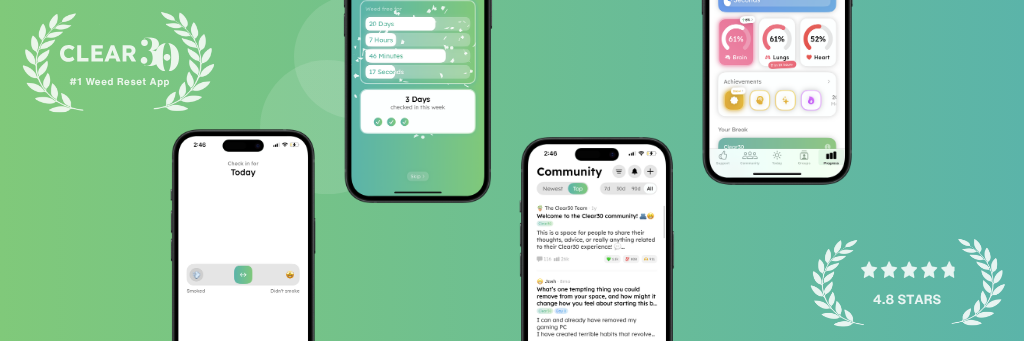
Clear30 is the #1 science-based weed-break app. Join 150,000+ others resetting their relationship with cannabis and taking control of their focus, sleep, and mood.
🧠 Embracing New Coping Strategies
Quitting weed can leave a gap where your go-to coping mechanism used to be. The cravings and stress might feel overwhelming at first, but they’re also a chance to build new skills and habits that help you handle challenges in healthier ways. This guide introduces therapeutic breathing techniques and creative strategies to navigate tough moments on your Clear30 journey.
🌿 Understanding Why Weed Becomes a Coping Mechanism
The Brain’s Need for Immediate Comfort
Weed offers quick relief from stress and discomfort by releasing dopamine. Over time, your brain begins to associate it with relaxation, making it harder to resist during tough moments.The Role of Habit Loops in Emotional Regulation
Using weed to cope creates a feedback loop: stress triggers the habit, the habit brings relief, and the pattern strengthens. Breaking this loop reveals the need for alternative ways to manage emotions.How Quitting Reveals the Gaps in Your Coping Toolbox
Quitting highlights where you might have relied too heavily on weed to handle discomfort. This isn’t a weakness—it’s an opportunity to develop tools that build resilience and self-control. In a Reddit post on r/infp about weed addiction and managing emotions, one person shared how quitting weed amplified their emotional swings, but also spurred them to find healthier ways to cope with stress.🌬️ Breathing Techniques for Immediate Relief
4-7-8 Breathing for Emotional Regulation
1. Inhale deeply through your nose for 4 counts. 2. Hold your breath for 7 counts. 3. Exhale slowly through your mouth for 8 counts.This technique calms the nervous system, reducing anxiety and creating a sense of control.Box Breathing to Restore Balance
1. Inhale for 4 counts. 2. Hold your breath for 4 counts. 3. Exhale for 4 counts. 4. Hold again for 4 counts.Box breathing is ideal for grounding yourself during cravings or stressful situations.Alternate Nostril Breathing for Focus and Calm
1. Close your right nostril with your thumb and inhale through your left nostril. 2. Close your left nostril with your ring finger and exhale through your right nostril. 3. Alternate for several cycles.This practice balances the mind and reduces restlessness.Sigh Breathing for Quick Stress Relief
1. Inhale deeply through your nose. 2. Exhale audibly through your mouth with a long, extended sigh.Sigh breathing releases tension and shifts your focus away from cravings.🛠️ Creative Strategies to Manage Tough Moments
Grounding With Your Five Senses
When cravings hit, use your senses to reconnect with the present:1. Name 5 things you see. 2. Touch 4 things around you. 3. Listen for 3 sounds. 4. Identify 2 scents. 5. Focus on 1 taste.This technique breaks the cycle of racing thoughts and brings clarity.Immersing Yourself in Flow Activities
Engage in activities that require full focus, like painting, playing an instrument, or solving puzzles. These moments of “flow” keep your mind occupied and reduce the intensity of cravings.Using Visualization to Reframe Stress
Imagine the craving or discomfort as a wave. Visualize it rising, peaking, and then fading away. This helps you view cravings as temporary rather than overwhelming.Practicing Micro-Journaling to Process Cravings
Write a few sentences about what you’re feeling and why. Journaling gives your emotions an outlet and helps you recognize patterns in your cravings. According to guidance by Mental Health America, writing down worries and stress can help you process them, ultimately improving emotional balance and resilience.Gamifying the Craving Response for Motivation
Turn your cravings into a challenge. Reward yourself for resisting or track how many times you overcome the urge in a day. This approach adds a sense of accomplishment to the process.🌀 Replacing Weed as a Coping Mechanism
Identify the Emotional Role Weed Played
Was it helping you unwind? Distracting you from stress? Reflecting on why you turned to weed helps you find healthier replacements.Build Rituals That Address the Same Emotional Needs
Replace smoking with calming rituals, like brewing tea, lighting a candle, or practicing deep breathing. These new routines provide comfort without relying on old habits.Strengthen Connections Through Social Alternatives
Spend time with friends who support your Clear30 or join activities that foster connection, like group fitness classes or volunteer work.Develop a Personal Coping Toolkit
Create a list of strategies and distractions, such as breathing techniques, grounding exercises, or creative hobbies, that you can turn to when cravings hit. As one person emphasized in the Reddit thread on weed addiction, learning to sit with uncomfortable emotions—rather than numbing them—eventually led them to more fulfilling coping practices.🧘♀️ Sustaining Healthy Coping Mechanisms Long-Term
Tracking Patterns to Recognize Growth
Keep a journal or use an app to track your progress. Noticing how your cravings decrease over time reinforces your commitment to healthier coping mechanisms.Adapting Strategies for New Challenges
Different situations call for different tools. Stay open to experimenting with new techniques to see what works best for each challenge.Creating a Resilient Routine Around Coping Practices
Incorporate your favorite strategies into your daily routine. Regular use strengthens these habits, making them easier to rely on during tough times.🔍 FAQs About Finding New Coping Strategies
1. How can I stay consistent when I’m feeling overwhelmed? Start with small, manageable steps. Even one deep breath or a short distraction can help reset your focus. 2. What if none of the strategies seem to work right away? Be patient and keep experimenting. Coping mechanisms take time to develop, and what works for one person may not work for another. 3. How can I use breathing exercises when I’m in public? Choose subtle techniques like box breathing or 4-7-8 breathing. No one will notice, and you’ll feel calmer in minutes. 4. How do I prevent old habits from creeping back? Stay proactive. Regularly practice your coping tools and reflect on your progress to reinforce your commitment to healthier habits. 5. Are these strategies helpful beyond Clear30? Yes. These techniques are designed to support your well-being long-term, helping you handle stress and challenges in all areas of life. 6. What’s the best way to combine coping tools? Layer strategies to suit the moment. For example, start with breathing to calm your mind, then follow up with a grounding exercise or journaling.
🏋️♂️ Building Strength Through New Coping Strategies
Replacing weed as a coping mechanism is about more than finding temporary fixes. It’s about building tools that empower you to handle life’s challenges with clarity and confidence. Each breath, distraction, or grounding exercise strengthens your ability to navigate tough moments without relying on old habits.The more you practice these strategies, the more natural they’ll feel. Over time, you’ll not only survive tough moments—you’ll thrive in them, using every challenge as an opportunity to grow.
Join the 30-day Clear30 Break and Reset Your Relationship with Weed
Clear30 is a science-backed, supportive way to take a 30-day break from cannabis. Our app gives you practical tools, daily guidance, and a community of people on the same journey.
- Claire — your 24/7 AI weed-break coach
- Daily break calendar & streak tracker
- Money-saved meter
- Groups with leaderboard + accountability pings
- Dedicated craving button & guided craving meditations
- Symptom cards for anxiety, sleep, cravings, and more
- Journal prompts and non-cannabis habit tracking
- Message a human peer expert
Whether you’re quitting, cutting back, or just taking a reset, Clear30 meets you where you are. Try the #1 science-based app to quit weed and compete in our 30-day break with others.
Ready to take a clear break from weed?
Start your 30-day break with Clear30 and reset your relationship with cannabis. You'll feel the difference. — The Clear30 Team
Download